
gpt-image-markup-edit
Markup-guided image edits with GPT Image 2.6 on varg: draw circles, boxes, arrows and short notes on a transparent PNG the same size as the source (scripts/markup.py turns a JSON list of shapes into that PNG, a preview and the prompt lines), upload it, then edit with provider_options.fal.markup_imag…
Install / Use
npx skills add hashgraph-online/awesome-codex-plugins --skill gpt-image-markup-editInstalls into whichever agent you are using.
SKILL.md
Installable skill definition
Quality Score
Category
AI & Machine LearningSupported Platforms
Our assessment of gpt-image-markup-edit
gpt-image-markup-edit scores 85/100 on our quality scale, 590th of 955 AI & Machine Learning skills we index.
Its SKILL.md is 9.6 KB long, well organised into 9 sections with 5 code examples: a thorough specification that gives an agent plenty to work with.
With 1,075 GitHub stars, it is one of the more widely adopted skills in the catalogue.
Maintenance, license and trust
- The repository was last updated about 2 months ago, so gpt-image-markup-edit is actively maintained.
- It is released under the Apache-2.0 license, a permissive license that allows use, modification and commercial use with attribution.
- Its trust signals score 100/100, with no cautions. These come from repository metadata, not a code audit — read the skill file before letting an agent act on it.
gpt-image-markup-edit compared with similar skills
All 4 of these similar skills score higher than gpt-image-markup-edit; compare them before choosing.
| Skill | Score | Stars | Updated | Format |
|---|---|---|---|---|
| gpt-image-markup-edit (this skill)by hashgraph-online | 85 | 1.1k | 46d ago | SKILL.md |
| claude-memby thedotmack | 100 | 115.0k | today | CLAUDE.md |
| taste-skillby Leonxlnx | 100 | 112.1k | today | CLAUDE.md |
| Understand-Anythingby Egonex-AI | 100 | 91.6k | 2d ago | CLAUDE.md |
| headroomby headroomlabs-ai | 100 | 79.2k | 1d ago | CLAUDE.md |
Frequently asked questions
- How do I install gpt-image-markup-edit?
- Run
npx skills add hashgraph-online/awesome-codex-plugins --skill gpt-image-markup-edit. The install tabs above show the steps for each supported agent. - Which AI agents does gpt-image-markup-edit work with?
- It is written for Universal, as a SKILL.md file. Other agents that read the same format can often use it too.
- Is gpt-image-markup-edit safe to use?
- It is Apache-2.0-licensed and scores 100/100 on trust signals. Skills are instructions an agent will follow, so read the file before installing it and do not approve commands you do not understand.
- Is gpt-image-markup-edit still maintained?
- The repository was last updated about 2 months ago, so gpt-image-markup-edit is actively maintained.
Skill content
View source on GitHubname: gpt-image-markup-edit description: >- Markup-guided image edits with GPT Image 2.6 on varg: draw circles, boxes, arrows and short notes on a transparent PNG the same size as the source (scripts/markup.py turns a JSON list of shapes into that PNG, a preview and the prompt lines), upload it, then edit with provider_options.fal.markup_image_url and a prompt written per colour ("Red circle: … Blue circle: … Change nothing outside the marks."). Includes the measured example (two changes, the rest of the frame kept), how to check what changed, and when to use a black-and-white mask_url instead. Use when someone wants to change one or several specific spots in an image, says "circle it", "only change this part", "fix this word", "add a hat here", or an edit keeps changing things it should not. Not for whole-image restyles (gpt-image-2-6 recipes), animation (gpt-image-gif) or video edits (varg-ai). license: MIT metadata: author: vargHQ version: "1.0.0" openclaw: requires: anyBins: - curl - python3 homepage: https://varg.ai/how-to compatibility: >- Needs a VARG_API_KEY with curl (see the varg-ai skill) or the varg MCP connection (https://mcp.varg.ai/mcp). One markup edit costs 7 credits (high quality + one reference, measured 2026-11-05). scripts/markup.py needs Python 3 and Pillow; the diff check uses ImageMagick 7. allowed-tools: Bash(curl:) Bash(jq:) Bash(python3:) Bash(magick:) Read Write Edit
Markup edits with GPT Image 2.6
Instead of describing where a change goes, you draw it. GPT Image 2.6 takes a second, transparent PNG
with only your marks on it, and the prompt says what each mark means. OpenAI: "You can now send a
marked-up image to the API to show exactly where you want an edit"
(@OpenAIDevs). OpenAI's guide: keep the original
as the first input, put the annotations on "a separate transparent PNG", send it as the markup, and
describe the changes in the prompt; "Markup applies to the first input image. Additional images serve
as references" (OpenAI image guide).
On varg the field is provider_options.fal.markup_image_url; fal: "Transparent PNG containing only
annotations (circles, arrows, notes) that guide the edit of the first image", and it "must match input
image dimensions".
The measured example (2026-11-05 on varg)
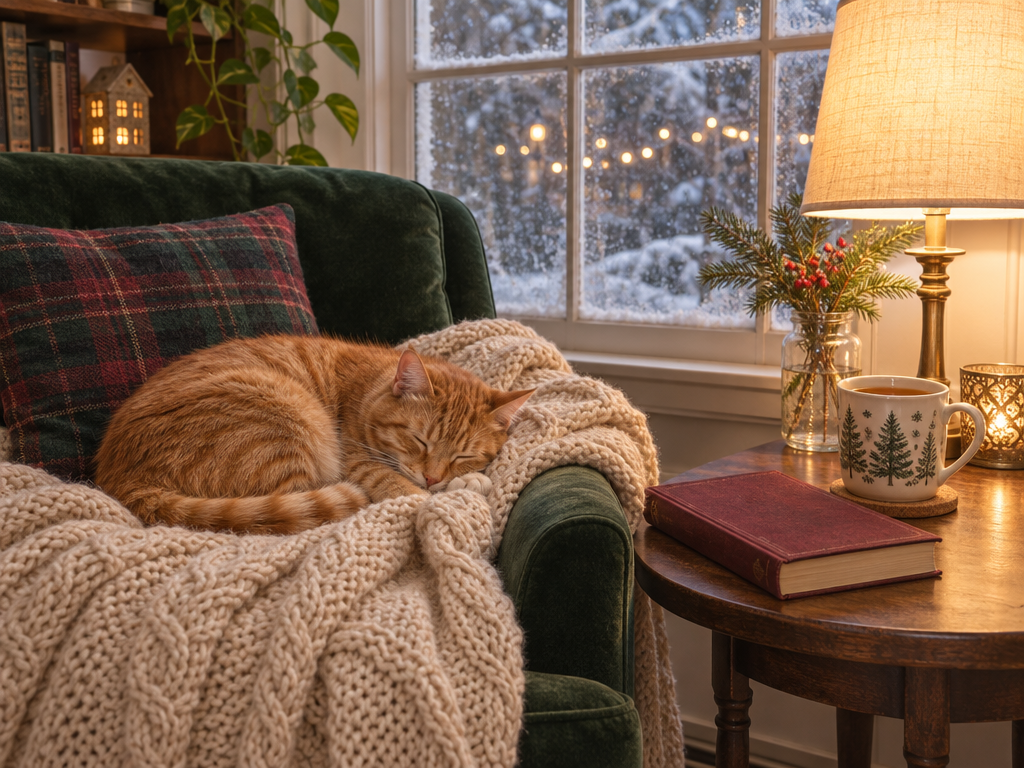
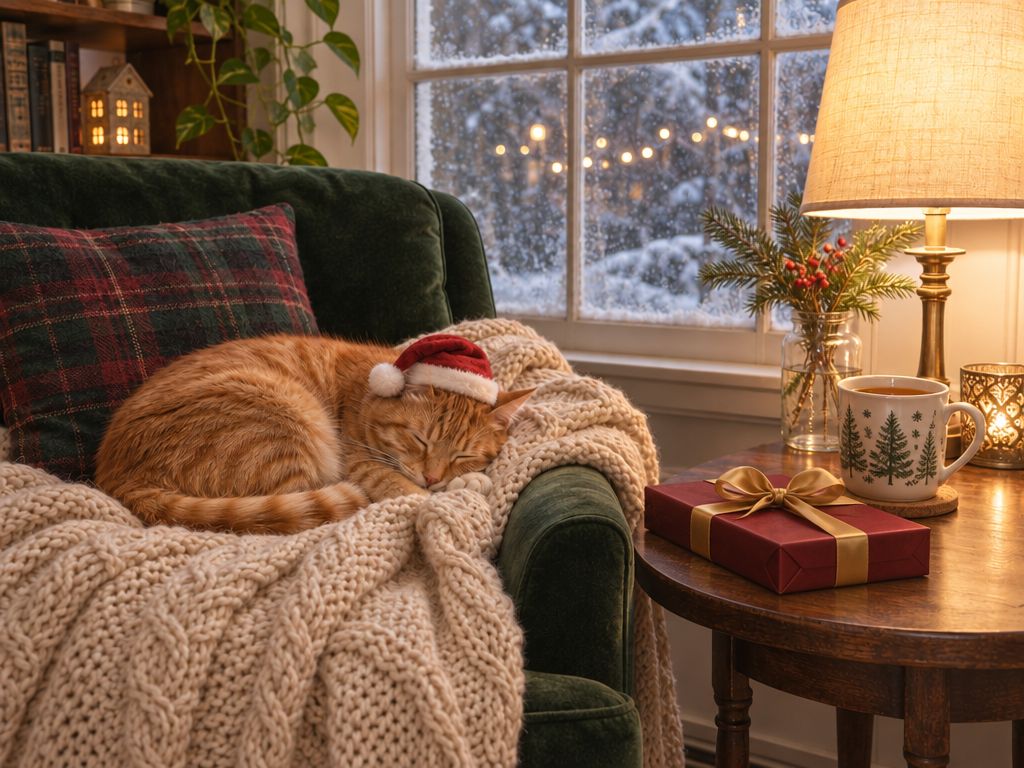
Idea by @IHayato, who drew a red and a blue circle on an illustration and asked 「赤丸にサンタ帽、青丸の本はプレゼントに」 ("a Santa hat in the red circle; the book in the blue circle becomes a present"): "face, hair ornament and clothes stayed the same, only the inside of the circles was redrawn, in a little over 20 seconds" (translated from the post).
Ours, with gpt_image_2_6:
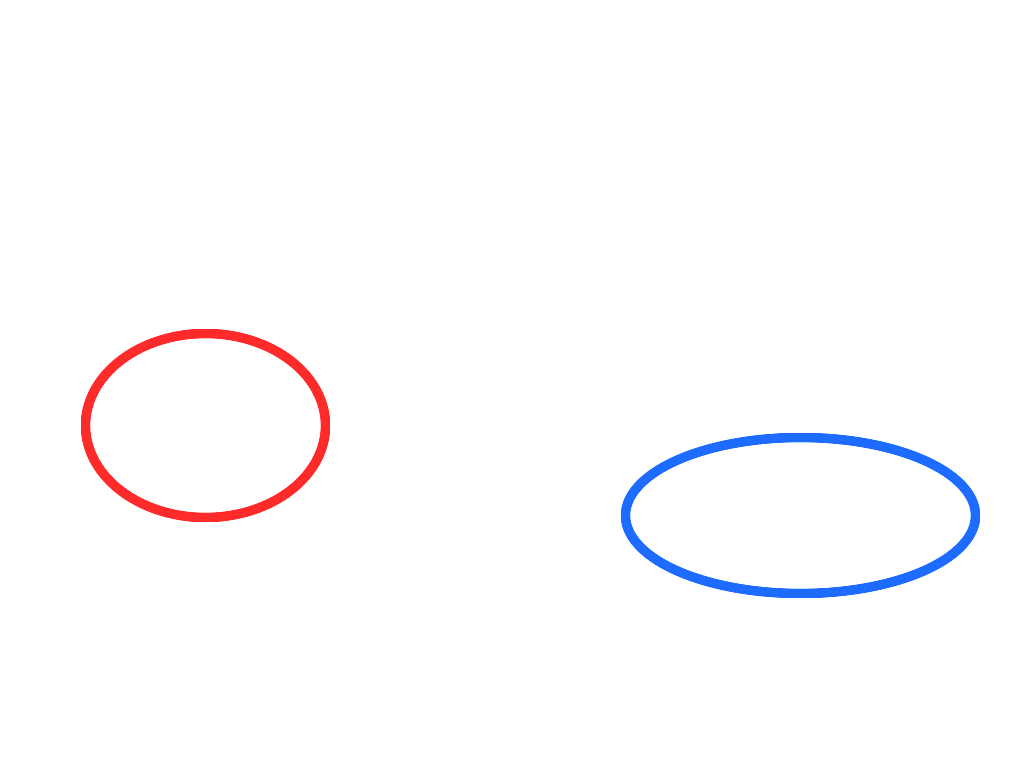
| Source (1024×768) | Markup layer | After | |---|---|---| | cosy reading nook | two ellipses, red and blue, 10 px | Santa hat on the cat, the book is a wrapped present |
Prompt: Red circle: Santa hat on the cat. Blue circle: book → wrapped present. Change nothing outside the circles.
7 credits. Outside the circles, 2.4% of pixels changed by more than 10% (mean change 6 of 255); inside
the circles 14.1% did (measured with the mask from markup.py --mask, grown by 20 px). The full-frame
diff (magick compare, 10% fuzz) flags 3.6% of pixels: the hat, the present, and light speckle on the
pillow, the plant and the mug.
1. Draw the markup: scripts/markup.py
Write the marks as JSON. Pixel coordinates of the source, or fractions (0-1) of its width and height:
{
  "units": "px",
  "width": 10,
  "shapes": [
    {"type": "ellipse", "box": [81, 329, 329, 521], "color": "red",  "label": "Santa hat on the cat"},
    {"type": "ellipse", "box": [621, 433, 979, 597], "color": "blue", "label": "book → wrapped present"}
  ]
}
python3 scripts/markup.py nook.png examples/nook.json -o nook_markup.png --preview nook_preview.png
markup   nook_markup.png (1024x768, RGBA, transparent outside the marks)
preview  nook_preview.png
prompt:
  Red circle: Santa hat on the cat.
  Blue circle: book → wrapped present.
  Change nothing outside the marks.
- Shapes:
ellipseandrect(box: [x0, y0, x1, y1]),arrow(from,to),text(at,text). labelgoes into the printed prompt only.note(1-3 words) is also drawn on the markup next to the shape, in the shape's colour with a white outline.examples/notes.jsonshows a box with a note and an arrow.- Colours: red, blue, green, yellow, magenta, orange, cyan, white, black or
#RRGGBB. Use one colour per change and colours that stand out from the image. - Stroke width defaults to 1.3% of the short side (10 px at 768), the width of the measured example.
- The markup is always the source's exact size and fully transparent outside the marks. Open the preview before you upload: a circle that misses the object misleads the edit.
Tested 2026-11-05: examples/nook.json on the source above reproduces the example markup (same bounding
box, 91% of its marked pixels overlap; the difference is in the stroke edges); examples/notes.json draws a
box, an arrow and two notes.
2. Upload both and edit
Upload the source and the markup (create_upload on the MCP, or POST /v2/files; see
gpt-image-2-6 section 6), then:
call_tool({
  "tool": "image",
  "input": {
    "model": "gpt_image_2_6",
    "prompt": "Red circle: Santa hat on the cat. Blue circle: book → wrapped present. Change nothing outside the circles.",
    "files": [{"url": "https://s3.varg.ai/files/194b94d0-58ff-4e8b-91de-4f1959d04013/file_736079abc4e4.png"}],
    "provider_options": {"fal": {
      "markup_image_url": "https://s3.varg.ai/files/194b94d0-58ff-4e8b-91de-4f1959d04013/file_af0957634427.png",
      "quality": "high",
      "reasoning_effort": "low"
    }}
  },
  "wait": true
})
- The source must be the first file; more files are references (e.g. a photo of the exact hat).
reasoning_effort: OpenAI: "For most edits, start with low complexity. If a scene has several elements or constraints to juggle, try medium or high" (@OpenAIDevs).qualityis separate: keephighfor the final.- With
filesthe call goes to the edit route by itself. For a chain of edits on one image, pinfal:openai/gpt-image-2.6/sunburst/edit(OpenAI says Sunburst keeps details more consistent across edits).
3. Write the prompt per colour
- One line per mark:
<Colour> <shape>: <what it becomes>.Name the colour and the shape exactly as drawn. - Say what the thing becomes, not how to draw it: "book → wrapped present", "the word SALE → SOLD".
- End with the boundary:
Change nothing outside the circles.(the line in the measured example). - Do all changes in one pass. Each extra edit round costs detail: faces changed from the second edit on (@k_matsumaru), wear showed from about the third (@NeneneAI). Go back to the original rather than editing an edit.
4. Check what changed
magick compare -fuzz 10% -metric AE before.png after.png diff.png # prints changed pixels; red in diff.png
Red outside your marks means the model touched more than you asked. A few percent of speckle is normal (3.6% in our example, mostly texture); a moved face or a changed sign is not. Rerun with a tighter mark, or with a mask (section 5).
5. Markup or mask?
| | markup_image_url | mask_url |
|---|---|---|
| What you send | Transparent PNG with circles, arrows, notes | Black-and-white PNG, same size: "White marks regions to edit and black marks regions to keep" (fal) |
| Best for | Several separate changes in one pass; "this thing → that thing"; rough areas | One exact region with hard edges: replace a background, a sky, a label area, the inside of a frame |
| The prompt says | What each colour means | What fills the white area |
| Precision | Guidance | Also guidance: "Masking with GPT Image is entirely prompt-based. The model uses the mask as guidance, but may not follow its exact shape with complete precision" (OpenAI guide) |
You cannot send both in one call (fal). markup.py --mask mask.png writes the filled shapes as white
on black from the same JSON, so you can try both from one drawing. We measured the markup route; we did
not run a mask_url edit for this skill.
6. Failure → fix
| What you see | Fix |
|---|---|
| The marks themselves are drawn into the result | Send the marks only as markup_image_url, never painted onto the source |
| markup_image_url rejected | The markup is not the source's exact size, not a PNG with transparency, or the call also has mask_url |
| The edit lands next to the mark | Tighter shape around the object; an arrow pointing at it; the object named in the line |
| Things outside the marks change | Change nothing outside the …; fewer marks per pass; the diff check; a mask for hard edges |
| A face changes after several rounds | Edit from the original; all changes in one pass; Sunburst for chains |
Related skills
gpt-image-2-6 (model guide, prices, recipes), gpt-image-gif and gpt-image-sticker-pack (fix a still before you animate it), gpt-image-sprite-sheet (circle one broken frame in a sheet).
Related Skills
claude-mem
115.0kPersistent Context Across Sessions for Every Agent – Captures everything your agent does during sessions, compresses it with AI, and injects relevant context back into future sessions. Works with Claude Code, OpenClaw, Codex, Gemini, Hermes, Copilot, OpenCode + More
taste-skill
112.1kAgent skills that give coding agents taste: art direction, reference images and a browser check instead of generic AI pages
Understand-Anything
91.6kGraphs that teach > graphs that impress. Turn any code into an interactive knowledge graph you can explore, search, and ask questions about. Works with Claude Code, Codex, Cursor, Copilot, Gemini CLI, and more.
headroom
79.2kCompress tool outputs, logs, files, and RAG chunks before they reach the LLM. 20% fewer tokens for coding agents, 60-95% fewer tokens for JSON, same answers. Library, proxy, MCP server.

Languages
Trust signals
From repository metadata: license, adoption, age and documentation. Not a code audit — see the Safety scan above for what the skill file itself contains.