
FastAPIQuickCRUD
Generate CRUD methods in FastApi from an SQLAlchemy schema
Install / Use
/learn @LuisLuii/FastAPIQuickCRUDREADME
FastAPI Quick CRUD






If you need apply business logic or add on some code, you can use my another open source project which supports CRUD router code generator
Introduction
I believe that many people who work with FastApi to build RESTful CRUD services end up wasting time writing repitive boilerplate code.
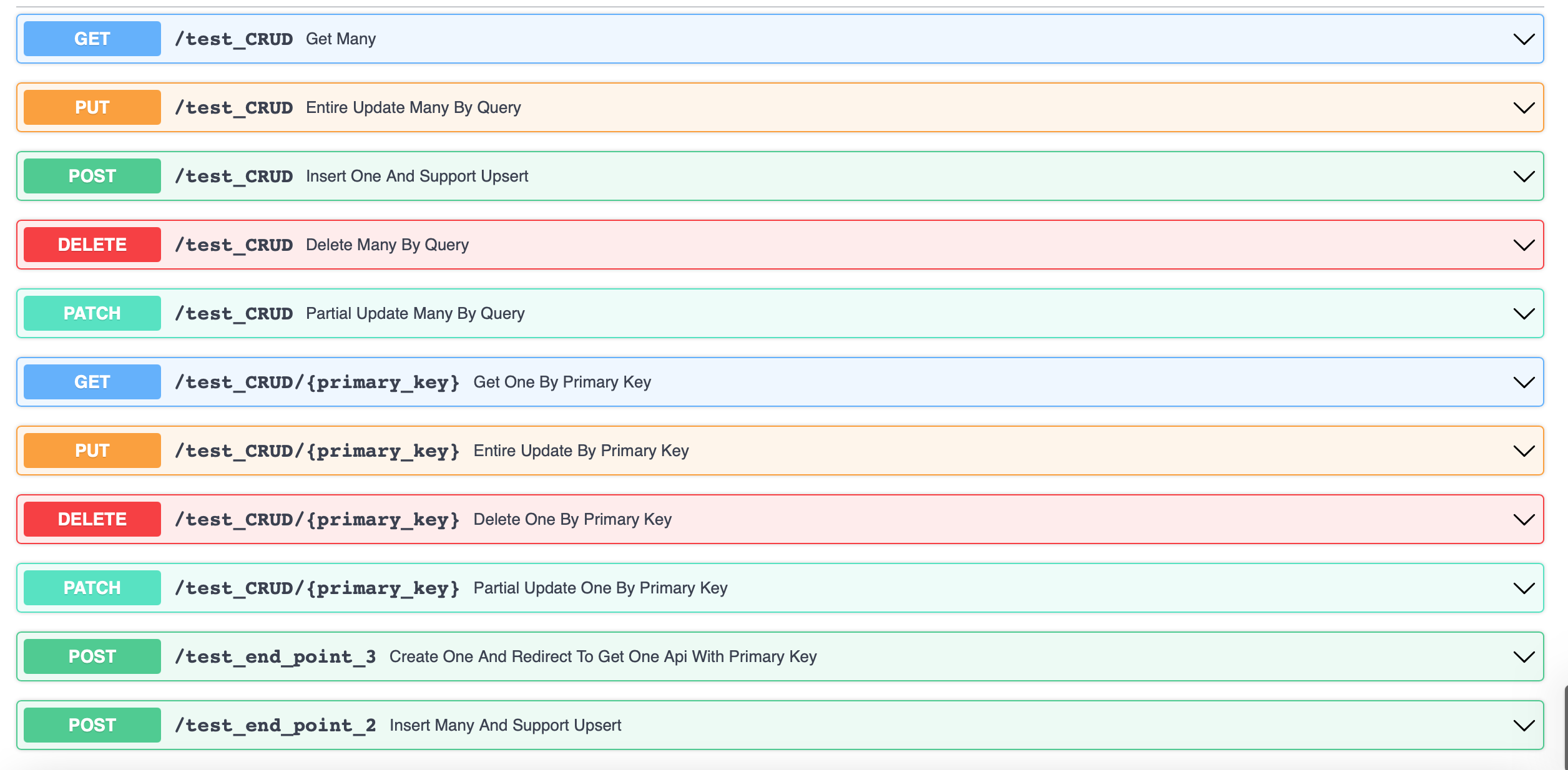
FastAPI Quick CRUD can generate CRUD methods in FastApi from an SQLAlchemy schema:
- Get one
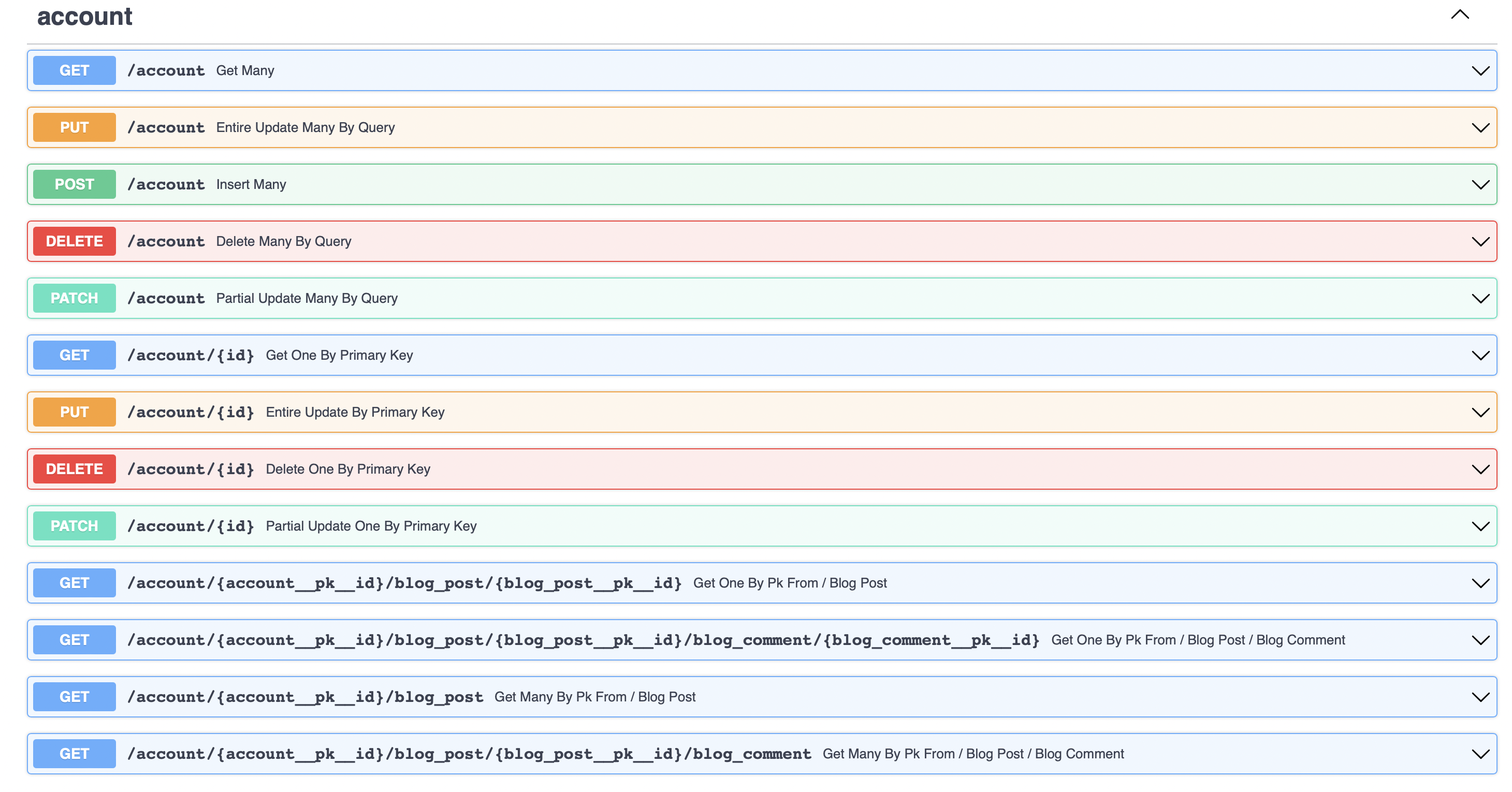
- Get one with foreign key
- Get many
- Get many with foreign key
- Update one
- Update many
- Patch one
- Patch many
- Create/Upsert one
- Create/Upsert many
- Delete One
- Delete Many
- Post Redirect Get
FastAPI Quick CRUDis developed based on SQLAlchemy 1.4.23 version and supports sync and async.
Advantages
-
[x] Support SQLAlchemy 1.4 - Allows you build a fully asynchronous or synchronous python service
-
[x] Full SQLAlchemy DBAPI Support - Support different SQL for SQLAlchemy
-
[x] Support Pagination -
Get manyAPI supportorder byoffsetlimitfield in API -
[x] Rich FastAPI CRUD router generation - Many operations of CRUD are implemented to complete the development and coverage of all aspects of basic CRUD.
-
[x] CRUD route automatically generated - Support Declarative class definitions and Imperative table
-
[x] Flexible API request -
UPDATE ONE/MANYFIND ONE/MANYPATCH ONE/MANYDELETE ONE/MANYsupports Path Parameters (primary key) and Query Parameters as a command to the resource to filter and limit the scope of the scope of data in request. -
[x] SQL Relationship -
FIND ONE/MANYsupports Path get data with relationship
Limitations
- ❌ If there are multiple unique constraints, please use composite unique constraints instead
- ❌ Composite primary key is not supported
- ❌ Unsupported API requests with on resources
xxx/{primary key}for tables without a primary key;UPDATE ONEFIND ONEPATCH ONEDELETE ONE
Getting started
I try to update the version dependencies as soon as possible to ensure that the core dependencies of this project have the highest version possible.
fastapi<=0.68.2
pydantic<=1.8.2
SQLAlchemy<=1.4.30
starlette==0.14.2
Installation
pip install fastapi-quickcrud
I suggest the following library if you try to connect to PostgreSQL
pip install psycopg2
pip install asyncpg
Usage
run and go to http://127.0.0.1:port/docs and see the auto-generated API
Simple Code (or see the longer (example)
from fastapi import FastAPI
from sqlalchemy import Column, Integer, \
    String, Table, ForeignKey, orm
from fastapi_quickcrud import crud_router_builder

Base = orm.declarative_base()


class User(Base):
    __tablename__ = 'test_users'
    id = Column(Integer, primary_key=True, autoincrement=True, unique=True)
    name = Column(String, nullable=False)
    email = Column(String, nullable=False)


friend = Table(
    'test_friend', Base.metadata,
    Column('id', ForeignKey('test_users.id', ondelete='CASCADE', onupdate='CASCADE'), nullable=False),
    Column('friend_name', String, nullable=False)
)

crud_route_1 = crud_router_builder(db_model=User,
                                   prefix="/user",
                                   tags=["User"],
                                   async_mode=True
                                   )
crud_route_2 = crud_router_builder(db_model=friend,
                                   prefix="/friend",
                                   tags=["friend"],
                                   async_mode=True
                                   )

app = FastAPI()
app.include_router(crud_route_1)
app.include_router(crud_route_2)
Foreign Tree With Relationship
from fastapi import FastAPI
from fastapi_quickcrud import crud_router_builder
from sqlalchemy import *
from sqlalchemy.orm import *
from fastapi_quickcrud.crud_router import generic_sql_crud_router_builder

Base = declarative_base()

class Account(Base):
    __tablename__ = "account"
    id = Column(Integer, primary_key=True, autoincrement=True)
    blog_post = relationship("BlogPost", back_populates="account")


class BlogPost(Base):
    __tablename__ = "blog_post"
    id = Column(Integer, primary_key=True, autoincrement=True)
    account_id = Column(Integer, ForeignKey("account.id"), nullable=False)
    account = relationship("Account", back_populates="blog_post")
    blog_comment = relationship("BlogComment", back_populates="blog_post")


class BlogComment(Base):
    __tablename__ = "blog_comment"
    id = Column(Integer, primary_key=True, autoincrement=True)
    blog_id = Column(Integer, ForeignKey("blog_post.id"), nullable=False)
    blog_post = relationship("BlogPost", back_populates="blog_comment")


crud_route_parent = crud_router_builder(
    db_model=Account,
    prefix="/account",
    tags=["account"],
    foreign_include=[BlogComment, BlogPost]

)
crud_route_child1 = generic_sql_crud_router_builder(
    db_model=BlogPost,
    prefix="/blog_post",
    tags=["blog_post"],
    foreign_include=[BlogComment]

)
crud_route_child2 = generic_sql_crud_router_builder(
    db_model=BlogComment,
    prefix="/blog_comment",
    tags=["blog_comment"]

)

app = FastAPI()
[app.include_router(i) for i in [crud_route_parent, crud_route_child1, crud_route_child2]]
SQLAlchemy to Pydantic Model Converter And Build your own API(example)
import uvicorn
from fastapi import FastAPI, Depends
from fastapi_quickcrud import CrudMethods
from fastapi_quickcrud import sqlalchemy_to_pydantic
from fastapi_quickcrud.misc.memory_sql import sync_memory_db

from sqlalchemy import CHAR, Column, Integer
from sqlalchemy.ext.declarative import declarative_base

app = FastAPI()

Base = declarative_base()
metadata = Base.metadata


class Child(Base):
    __tablename__ = 'right'
    id = Column(Integer, primary_key=True)
    name = Column(CHAR, nullable=True)


friend_model_set = sqlalchemy_to_pydantic(db_model=Child,
                                          crud_methods=[
                                              CrudMethods.FIND_MANY,
                                              CrudMethods.UPSERT_MANY,
                                              CrudMethods.UPDATE_MANY,
                                              CrudMethods.DELETE_MANY,
                                              CrudMethods.CREATE_ONE,
                                              CrudMethods.PATCH_MANY,

                                          ],
                                          exclude_columns=[])


post_model = friend_model_set.POST[CrudMethods.CREATE_ONE]
sync_memory_db.create_memory_table(Child)

@app.post("/hello",
          status_code=201,
          tags=["Child"],
          response_model=post_model.responseModel,
          dependencies=[])
async def my_api(
        query: post_model.requestBodyModel = Depends(post_model.requestBodyModel),
        session=Depends(sync_memory_db.get_memory_db_session)
):
    db_item = Child(**query.__dict__)
    session.add(db_item)
    session.commit()
    session.refresh(db_item)
    return db_item.__dict__


uvicorn.run(app, host="0.0.0.0", port=8000, debug=False)
- Note: you can use sqlacodegen to generate SQLAlchemy models for your table. This project is based on the model development and testing generated by sqlacodegen
Main module
Generate CRUD router
crud_router_builder args
- db_session [Optional]
execute session generator- default using in-memory db with create table automatically
- example:
- sync SQLALchemy:
  from sqlalchemy.orm import sessionmaker
  def get_transaction_session():
      try:
          db = sessionmaker(...)
