
TorchSR
Super Resolution datasets and models in Pytorch
Install / Use
/learn @Coloquinte/TorchSRREADME



Super-Resolution Networks for Pytorch
Super-resolution is a process that increases the resolution of an image, adding additional details. Methods using neural networks give the most accurate results, much better than other interpolation methods. With the right training, it is even possible to make photo-realistic images.
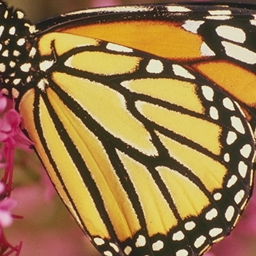
For example, here is a low-resolution image, magnified x4 by a neural network, and a high resolution image of the same object:


In this repository, you will find:
- the popular super-resolution networks, pretrained
- common super-resolution datasets
- Pytorch datasets and transforms adapted to super-resolution
- a unified training script for all models
Models
The following pretrained models are available. Click on the links for the paper:
Newer and larger models perform better: the most accurate models are EDSR (huge), RCAN and NinaSR-B2. For practical applications, I recommend a smaller model, such as NinaSR-B1.
<details> <summary>Expand benchmark results</summary> <details> <summary>Set5 results</summary>| Network | Parameters (M) | 2x (PSNR/SSIM) | 3x (PSNR/SSIM) | 4x (PSNR/SSIM) | | ------------------- | -------------- | -------------- | -------------- | -------------- | | carn | 1.59 | 37.88 / 0.9600 | 34.32 / 0.9265 | 32.14 / 0.8942 | | carn_m | 0.41 | 37.68 / 0.9594 | 34.06 / 0.9247 | 31.88 / 0.8907 | | edsr_baseline | 1.37 | 37.98 / 0.9604 | 34.37 / 0.9270 | 32.09 / 0.8936 | | edsr | 40.7 | 38.19 / 0.9609 | 34.68 / 0.9293 | 32.48 / 0.8985 | | ninasr_b0 | 0.10 | 37.72 / 0.9594 | 33.96 / 0.9234 | 31.77 / 0.8877 | | ninasr_b1 | 1.02 | 38.14 / 0.9609 | 34.48 / 0.9277 | 32.28 / 0.8955 | | ninasr_b2 | 10.0 | 38.21 / 0.9612 | 34.61 / 0.9288 | 32.45 / 0.8973 | | rcan | 15.4 | 38.27 / 0.9614 | 34.76 / 0.9299 | 32.64 / 0.9000 | | rdn | 22.1 | 38.12 / 0.9609 | 33.98 / 0.9234 | 32.35 / 0.8968 |
</details> <details> <summary>Set14 results</summary>| Network | Parameters (M) | 2x (PSNR/SSIM) | 3x (PSNR/SSIM) | 4x (PSNR/SSIM) | | ------------------- | -------------- | -------------- | -------------- | -------------- | | carn | 1.59 | 33.57 / 0.9173 | 30.30 / 0.8412 | 28.61 / 0.7806 | | carn_m | 0.41 | 33.30 / 0.9151 | 30.10 / 0.8374 | 28.42 / 0.7764 | | edsr_baseline | 1.37 | 33.57 / 0.9174 | 30.28 / 0.8414 | 28.58 / 0.7804 | | edsr | 40.7 | 33.95 / 0.9201 | 30.53 / 0.8464 | 28.81 / 0.7872 | | ninasr_b0 | 0.10 | 33.24 / 0.9144 | 30.02 / 0.8355 | 28.28 / 0.7727 | | ninasr_b1 | 1.02 | 33.71 / 0.9189 | 30.41 / 0.8437 | 28.71 / 0.7840 | | ninasr_b2 | 10.0 | 34.00 / 0.9206 | 30.53 / 0.8461 | 28.80 / 0.7863 | | rcan | 15.4 | 34.13 / 0.9216 | 30.63 / 0.8475 | 28.85 / 0.7878 | | rdn | 22.1 | 33.71 / 0.9182 | 30.07 / 0.8373 | 28.72 / 0.7846 |
</details> <details> <summary>DIV2K results (validation set)</summary>| Network | Parameters (M) | 2x (PSNR/SSIM) | 3x (PSNR/SSIM) | 4x (PSNR/SSIM) | 8x (PSNR/SSIM) | | ------------------- | -------------- | -------------- | -------------- | -------------- | -------------- | | carn | 1.59 | 36.08 / 0.9451 | 32.37 / 0.8871 | 30.43 / 0.8366 | N/A | | carn_m | 0.41 | 35.76 / 0.9429 | 32.09 / 0.8827 | 30.18 / 0.8313 | N/A | | edsr_baseline | 1.37 | 36.13 / 0.9455 | 32.41 / 0.8878 | 30.43 / 0.8370 | N/A | | edsr | 40.7 | 36.56 / 0.9485 | 32.75 / 0.8933 | 30.73 / 0.8445 | N/A | | ninasr_b0 | 0.10 | 35.77 / 0.9428 | 32.06 / 0.8818 | 30.09 / 0.8293 | 26.60 / 0.7084 | | ninasr_b1 | 1.02 | 36.35 / 0.9471 | 32.51 / 0.8892 | 30.56 / 0.8405 | 26.96 / 0.7207 | | ninasr_b2 | 10.0 | 36.52 / 0.9482 | 32.73 / 0.8926 | 30.73 / 0.8437 | 27.07 / 0.7246 | | rcan | 15.4 | 36.61 / 0.9489 | 32.78 / 0.8935 | 30.73 / 0.8447 | 27.17 / 0.7292 | | rdn | 22.1 | 36.32 / 0.9468 | 32.04 / 0.8822 | 30.61 / 0.8414 | N/A |
</details> <details> <summary>B100 results</summary>| Network | Parameters (M) | 2x (PSNR/SSIM) | 3x (PSNR/SSIM) | 4x (PSNR/SSIM) | | ------------------- | -------------- | -------------- | -------------- | -------------- | | carn | 1.59 | 32.12 / 0.8986 | 29.07 / 0.8042 | 27.58 / 0.7355 | | carn_m | 0.41 | 31.97 / 0.8971 | 28.94 / 0.8010 | 27.45 / 0.7312 | | edsr_baseline | 1.37 | 32.15 / 0.8993 | 29.08 / 0.8051 | 27.56 / 0.7354 | | edsr | 40.7 | 32.35 / 0.9019 | 29.26 / 0.8096 | 27.72 / 0.7419 | | ninasr_b0 | 0.10 | 31.97 / 0.8974 | 28.90 / 0.8000 | 27.36 / 0.7290 | | ninasr_b1 | 1.02 | 32.24 / 0.9004 | 29.13 / 0.8061 | 27.62 / 0.7377 | | ninasr_b2 | 10.0 | 32.32 / 0.9014 | 29.23 / 0.8087 | 27.71 / 0.7407 | | rcan | 15.4 | 32.39 / 0.9024 | 29.30 / 0.8106 | 27.74 / 0.7429 | | rdn | 22.1 | 32.25 / 0.9006 | 28.90 / 0.8004 | 27.66 / 0.7388 |
</details> <details> <summary>Urban100 results</summary>| Network | Parameters (M) | 2x (PSNR/SSIM) | 3x (PSNR/SSIM) | 4x (PSNR/SSIM) | | ------------------- | -------------- | -------------- | -------------- | -------------- | | carn | 1.59 | 31.95 / 0.9263 | 28.07 / 0.849 | 26.07 / 0.78349 | | carn_m | 0.41 | 31.30 / 0.9200 | 27.57 / 0.839 | 25.64 / 0.76961 | | edsr_baseline | 1.37 | 31.98 / 0.9271 | 28.15 / 0.852 | 26.03 / 0.78424 | | edsr | 40.7 | 32.97 / 0.9358 | 28.81 / 0.865 | 26.65 / 0.80328 | | ninasr_b0 | 0.10 | 31.33 / 0.9204 | 27.48 / 0.8374 | 25.45 / 0.7645 | | ninasr_b1 | 1.02 | 32.48 / 0.9319 | 28.29 / 0.8555 | 26.25 / 0.7914 | | ninasr_b2 | 10.0 | 32.91 / 0.9354 | 28.70 / 0.8640 | 26.54 / 0.8008 | | rcan | 15.4 | 33.19 / 0.9372 | 29.01 / 0.868 | 26.75 / 0.80624 | | rdn | 22.1 | 32.41 / 0.9310 | 27.49 / 0.838 | 26.36 / 0.79460 |
</details> </details>All models are defined in torchsr.models. Other useful tools to augment your models, such as self-ensemble methods and tiling, are present in torchsr.models.utils.
Datasets
The following datasets are available. Click on the links for the project page:
All datasets are defined in torchsr.datasets. They return a list of images, with the high-resolution image followed by downscaled or degraded versions.
Data augmentation methods are provided in torchsr.transforms.
Datasets are downloaded automatically when using the download=True flag, or by running the corresponding script i.e. ./scripts/download_div2k.sh.
Usage
from torchsr.datasets import Div2K
from torchsr.models import ninasr_b0
from torchvision.transforms.functional import to_pil_image, to_tensor

# Div2K dataset
dataset = Div2K(root="./data", scale=2, download=False)

# Get the first image in the dataset (High-Res and Low-Res)
hr, lr = dataset[0]

# Download a pretrained NinaSR model
model = ninasr_b0(scale=2, pretrained=True)

# Run the Super-Resolution model
lr_t = to_tensor(lr).unsqueeze(0)
sr_t = model(lr_t)
sr = to_pil_image(sr_t.squeeze(0).clamp(0, 1))
sr.show()
from torchsr.datasets import Div2K
from torchsr.models import edsr, rcan
from torchsr.models.utils import ChoppedModel, SelfEnsembleModel
from torchsr.transforms import ColorJitter, Compose, RandomCrop

# Div2K dataset, cropped to 256px, width color jitter
dataset = Div2K(
    root="./data", scale=2, download=False,
    transform=Compose([
        RandomCrop(256, scales=[1, 2]),
        ColorJitter(brightness=0.2)
    ]))

# Pretrained RCAN model, with tiling for large images
model = ChoppedModel(
    rcan(scale=2, pretrained=True), scale=2,
    chop_size=400, chop_overlap=10)

# Pretrained EDSR model, with self-ensemble method for higher quality
model = SelfEnsembleModel(edsr(scale=2, pretrained=True))
<
